MASS
Model of Architecture Serving Society redesign
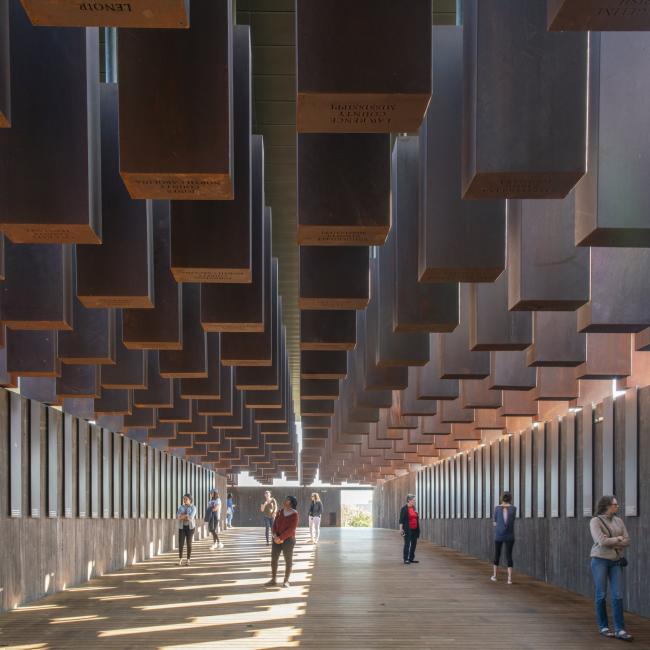
MASS, or Model of Architecture Serving Society, is a large – if not "massive" – non-profit collective of architects and designers who have done hundreds of impressive community engaged projects over 20 years of work. MASS’ approach of using design and architecture to engage communities and push for systemic social change resonates with our own approaches and helped make this collaboration close to our hearts.
Challenge
We first worked with MASS on their last major redesign in 2016–2017. We continued to provide maintenance and support for the ensuing decade, including design changes by a new art director. Continued staff turnover made us a key source of institutional knowledge about use of the site, yet it also meant that we no longer had a working relationship with design leadership. For this next major redesign, MASS leadership began work with a different, design-dominant firm that chose to develop the site themselves. We were using Drupal's powerful content export capabilities to provide the firm with data in exactly the format they needed and waiting to be told MASS would switch away from our site… when instead we were informed the competing firm was having difficulty both achieving functional parity with the old site—particularly ease of editing—and also with implementing their own design.
We took on the challenge.
Approach
Instead of building completely from scratch, we built the new site as an iteration from the previous one, allowing content to be kept in place or more easily migrated. Sticking with Drupal, we upgraded to the most current version and implemented a host of technological modernizations along the way as well (a lot changes happen out there over an 8 year span).
On the design front, the design changes kept coming. A major portion of the effort was led from a MASS internal team led by Bob Stone. Another outside consultant put his stamp on it. MASS leadership continued to make revisions.
Finally, Annie Yuxi Wang came in as a contractor to MASS and integrated the various design directions with her own amazing artistic sense and put the project on track to success. Annie provided us with Figma designs and mockups. (We have continued to work with Annie on subsequent client projects!)
Many constraints remained the same. Since MASS has important members and projects located well outside of the privileged world of fast internet (including rural and African projects), the decidedly image heavy site needed to be optimized for slower connections.
The main impact on our approach was continual design and functionality revisions. Symbolically, at the last minute the name of the organization changed, from MASS Design Group to (what "MASS" has always literally stood for) Model of Architecture Serving Society.
Design language
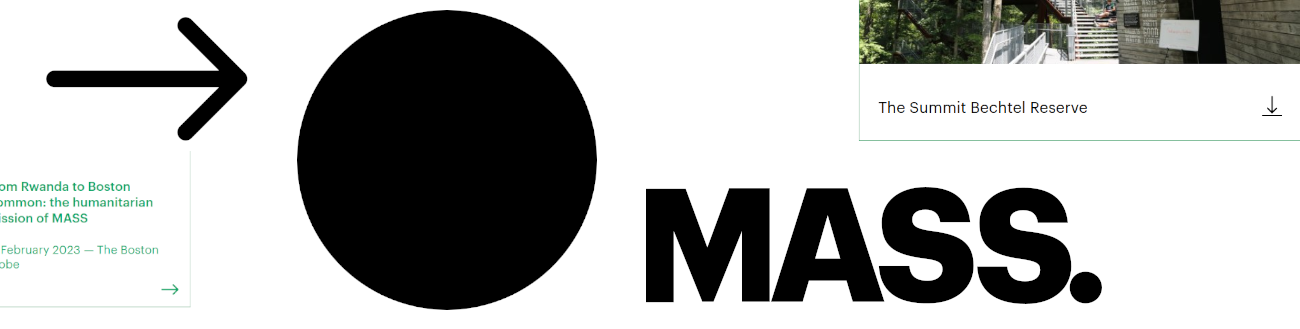
MASS designers worked with us closely driving the redesign with some great design leadership especially from Annie. The new design language included a number of elements recurring through the site subtly weaving a visual story:
 The MASSive dot recurs through the site, small in the logo and then expands as a navigation hint and tab indicator used in Projects.
We incorporated the dot as an element to accompany headers built into the wysiwyg styles for editors.
Postits hanging on the edge of images speak to the hands on work some of us remember from in person collaborative work, we recognize it from a collective brainstorm or the precariously attached reminder.
Near the latter stretch of the project, it became clear that the new clean look could benefit from an infusion of colors for certain pages (beyond the dominant MASS green). You can see this in action on the Purpose page where a theme color for the page is chosen from a color scheme pickable in the back end and is then repeated in select paragraphs and the footer.
These were worked into the Drupal user interface for content editors to spin up for their own page design. Mostly these elements were attached to paragraphs for liberal use anywhere on the site.
Some content types of course got their own treatment, notably our Person nodes designed to appear as a full page modal sometimes including their own modals on modals.
Workflow
With a lot of cooks in the editorial kitchen, MASS needed a solid tool for handling content in different states of completion. So we wrote the Content Moderation Tabs and Workflow buttons modules to meet the need. Depending on permissions granted, the editor has access to a row of buttons for sending the node into various states including Archive or Trash (for the powerful few), to create a new draft or publish/unpublish etc. This gives content editors some ability to spend time on updating or redesigning content behind the scenes without disrupting the site (or accidentally deleting content).
Contributing back
As the site progressed over time and Drupal itself saw its own technological shifts, working on MASS allowed us to meet new incompatibilities, edge cases and new needs with our own fixes or brand new modules which are now in the Drupal ecosystem for anyone to freely use.
Some of these include:
- the Give module to accept donations and payments.
- Content Moderation Tabs
- Workflow buttons
- Entity Reference Override
- and poetically named Display One Filter Another with Client-side Hierarchical Select
Along the way some of the new technologies we pulled in htmx (in use ubiquitously on the site), class based Drupal hooks, and a slew of new HTML and CSS breaking into mainstream browsers during development including <dialog> tags, CSS :has() selectors, and more.
Results
After a long process of design iterations, rethinks, and a good deal of feature creep the gorgeous new website finally launched in December of 2025, a couple days before MASS’ Abundant Futures event.
MASS
2026
content governance, design, development, donation optimization, migration, performance tune-up, prototyping, and website upgrade
Benjamin Melançon, Dave Onion, and Chris Thompson
Annie Yuxi